Luloy: The Brushed Handwritten Font That Feels Effortlessly Authentic
There’s a particular kind of warmth that only a handwritten font can bring to a project. It’s the difference between a generic greeting card and one that feels like it was penned just for you. Luloy, a brushed handwritten typeface, captures this feeling with remarkable clarity. It’s not trying to be a formal script or a casual scrawl; it sits in that sweet spot of organic, textured elegance that feels both personal and polished. For anyone working on projects where connection and authenticity matter, Luloy is a tool worth understanding.
Understanding Luloy's Visual Character
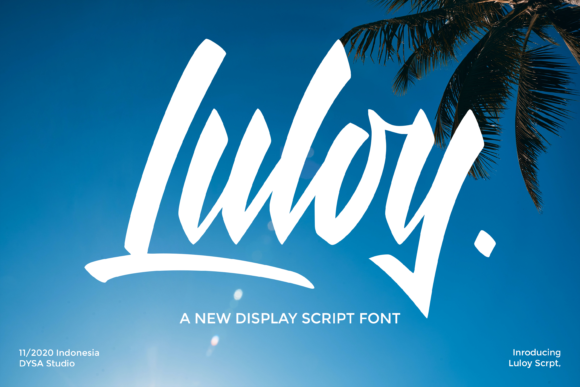
At its core, Luloy is a premium font defined by its brushed texture. Each letterform appears as if it were painted with a single, confident stroke of a brush pen. This gives the typeface a dynamic, human quality. The letters have a slight irregularity in their baselines and stroke weights, which is the hallmark of genuine handwriting. This isn't a sterile, digitized script; it has movement and life baked into its design.
The personality of Luloy is approachable and creative. It avoids the overly formal or romantic connotations of some script fonts. Instead, it leans into a modern, artisanal aesthetic. Think of the lettering on a specialty coffee bag, the title of a lifestyle blog, or the branding for a boutique studio. It communicates care, craftsmanship, and a touch of individuality without feeling fussy or inaccessible.
Where Luloy Truly Shines: Practical Applications
The real value of a font like Luloy is measured by its utility. Where does this creative font fit best in the real world of design and communication? Its strengths are particularly evident in projects aiming for a personal, crafted, or contemporary feel.
In brand identity, Luloy can be a secret weapon for establishing a distinct voice. It works beautifully for logos, especially for businesses in the wellness, lifestyle, artisan food, or creative service sectors. Imagine it paired with a clean sans serif font for a yoga studio's name, or used for the masthead of a independent magazine. It sets a tone that is friendly and skilled.
For editorial design and publishing, Luloy excels in headlines, pull quotes, and chapter titles. It draws the eye and adds visual interest to a page dominated by body text. A cookbook using Luloy for recipe names instantly feels more home-spun and inviting. Similarly, in packaging design, it can highlight key ingredients or brand slogans, making a product stand out on the shelf with its tactile appearance.
Digital spaces are equally welcoming. As a web design element, Luloy is perfect for hero section titles, call-to-action buttons, or featured post headers. It breaks the monotony of standard web typography and injects personality. For social media graphics, it’s a powerhouse. Instagram quotes, Pinterest pins, and Facebook ad headlines gain immediate emotional resonance when set in a font like Luloy. It helps content feel more authentic and shareable in a crowded feed.
Integrating Luloy Into Your Design Workflow
Choosing a font is a strategic decision, not just an aesthetic one. Before integrating Luloy, consider the project's core message. Is it meant to feel intimate, creative, and human? If the answer is yes, it’s a strong candidate. If the project requires strict formality or ultra-clean minimalism, a different typeface might be more appropriate.
A critical step is testing font pairing. Luloy, as a handwritten font, works best when balanced with a more neutral companion. A sturdy serif font or a geometric sans serif font can provide the necessary contrast and ensure overall readability. For instance, pairing Luloy with a font like Montserrat or Lora creates a clear visual hierarchy: Luloy handles the expressive headlines, while the companion font manages the informative body text.
Always review the font's full character set. A quality commercial font like Luloy should include a full range of punctuation, numerals, and often stylistic alternates or ligatures. These extra glyphs allow for more nuanced typographic work and help avoid repetitive letterforms in longer text settings.
Readability is paramount, especially for logo design or text that needs to be scanned quickly. Luloy is primarily a display font, meaning it’s optimized for larger sizes like headlines, not for long paragraphs. Use it where its character can be appreciated—at a size where the brushed texture is clear and legible. For small text, always revert to a more conventional font.
Finally, respect the licensing. If you’re using Luloy for a client project, merchandise, or a commercial product, ensure you have the correct commercial font license. This protects your work and supports the type designers who create these valuable design assets.
A Final Thought on Authenticity
In a digital world saturated with polished perfection, fonts like Luloy offer a valuable counterpoint. They reintroduce a sense of the human hand, of thoughtfulness and care. Whether you're a designer shaping a brand, an entrepreneur building a community, or a content creator sharing your story, the right typographic choice can make your message feel more genuine. Luloy isn't just another handwritten font; it's a bridge between the warmth of personal craft and the professionalism of modern design. Used thoughtfully, it can elevate a project from simply being seen to truly being felt.